The Community Centre at Bhopoli offers not just health services but also development activities for the community.
Most of the villages are remote, so travelling to the centre is often difficult.
Hence, we travel to the villages with a fully equipped clinic on wheels. 25 villages, more than 5000 patients receive healthcare at their doorsteps.
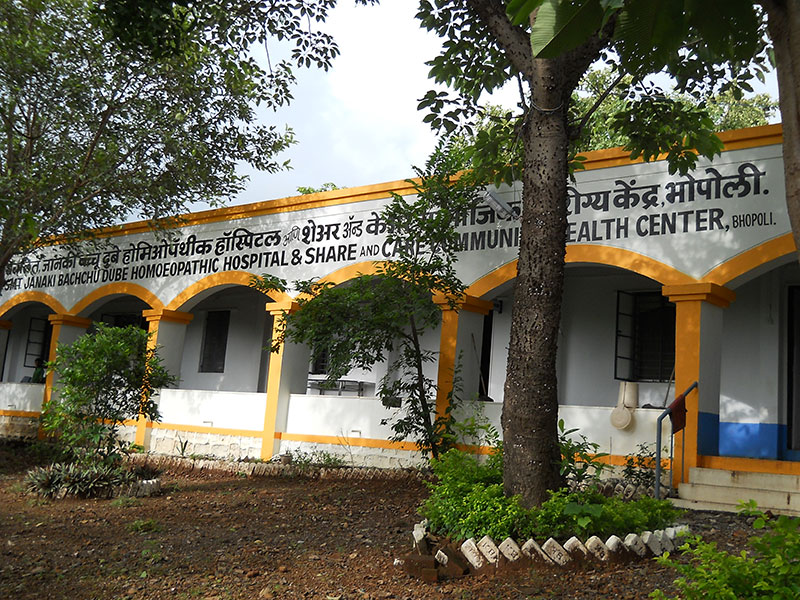
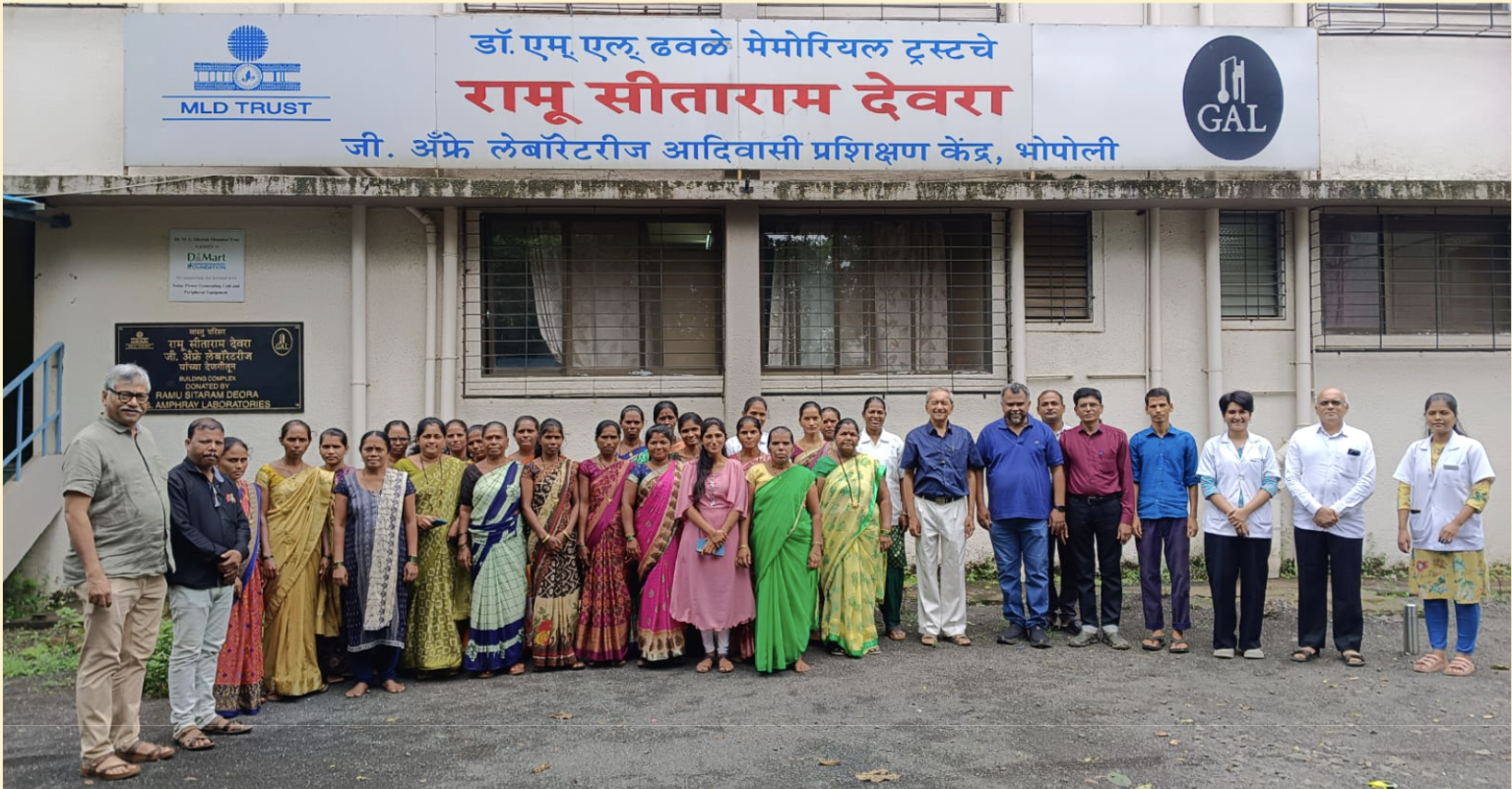
Located deep in a tribal village, the Community centre deals with a complex web of belief systems, social norms, and generational poverty. We are working not just to treat illness, but to bring about behavioural change to improve community health
Recognising that mere health is not enough, while treating illnesses, we started several initiatives aimed at community development. Organic farming to enhance income, Warli painting to create livelihood, women’s self-help group for financial empowerment, Watershed to reduce migration, Education to improve scholastic level, and many other such impactful initiatives.
Local transport being a perennial problem, several health issues are left untreated until they become life-threatening scenarios. To combat this, a clinic-on-wheel travels to remote villages and makes health care accessible.
The objective of this activity is to reach the community & screen them for chronic illnesses, hitherto ignored. These illnesses, unless treated, pose a threat to the state of health of the community as a whole. Through these screening camps, we are able to identify chronic conditions affecting skin (pediatric group more affected than elder), musculoskeleton system, Genito-urinary system (Female), hypertension, anemia, vision disorders etc.
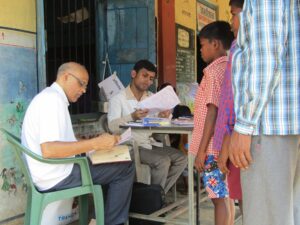
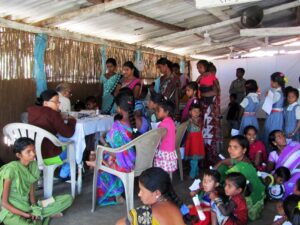
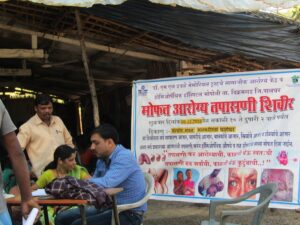
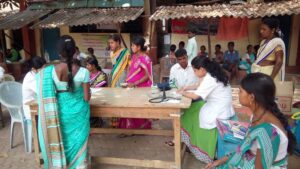
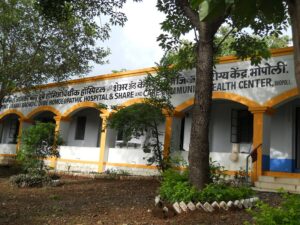
The Mobile Medical Unit is literally a clinic-on-wheels. With in-built Examination tables and all basic clinical equipment, the MMU allows us to take health care services to those who cannot reach us due to lack of transportation, lack of funds or fear of going to a hospital.
The Community Health Volunteer, spreads the awareness of importance of visiting a medical practitioner and encourages patients to come to designated spot on a designated date. She also encourages expectant mothers to register for Antenatal care and those register to come for routine checkup.
The MMU is extremely convenient to expectant mothers, children and to geriatric population, whose ability to visit the hospital is rather limited.
Malnutrition needs no introduction. It stunts the physical and mental growth of children from an early age. In our intervention area, about 50% of the children under the age of 5 are malnourished.
We have designed an extremely holistic program based on Homoeopathy principles
Over the last ten years:
Adequate research is available on how care during the first 1000 days, starting from conception till the child attains 2 years of age, plays a significant role in the child’s health & growth.
Our intervention includes:
The impact:
In rural India, anaemia amongst women is extremely high (and sadly increasing). Several conditions, i.e. deficient diet, low awareness, and poor hygiene, result in an anaemic condition. We have set up a multi-pronged approach to tackle this menace as best as we can.
The impact :
The broad goal is to make farming on small land plots ecologically sustainable and Economically viable and meet food security and balanced nutrition needs of the family along with incomes for enhancing quality of life.
We have been ably supported by:
Currently in 2017 we are working with 60 tribal farmers; out of them 50 have been registered With Agricultural Technology Management Agency (ATMA) a central Government initiative aimed at dissemination of technology and extension services at grass roots through better involvement of farmers. In Vikramgad taluka MLDT supported group is the only group practicing organic cultivation for over 3 years.
Currently in 2017 we are working with 60 tribal farmers; out of them 50 have been registered With Agricultural Technology Management Agency (ATMA) a central Government initiative aimed at dissemination of technology and extension services at grass roots through better involvement of farmers. In Vikramgad taluka MLDT supported group is the only group practicing organic cultivation for over 3 years.
The seeds of intervention of the activity to support education in schools were sown when one of our senior doctor on his visit to a pada discovered that children in that pada had no school infrastructure. School was organized in homes and verandahs of the community members and shifted from place to place depending on availability of space. Thus began a long enriching journey for the doctor who with active community involvement supplemented with material support which he organized from donors managed to raise a primary school building!
Age old problems of inequity, poverty, strife, ill health, child malnourishment have their roots in education. Consequently, Community services Group (CSG), Bhopoli in its quest for holistic health and development has been exploring the needs of education posed in its area of operations and nature of contribution it can make.
Scope of the Education Enrichment Programme
Programme:
Each One Teach One (EOTO), an NGO based in Mumbai, active in the field of education with municipal schools evinced interest in partnering with MLDT to expand their work to rural / tribal area. The partnership between the two organizations commenced in 2006 and has played a key role in the development of the Education Enrichment Programme.
Survey by the students of the Tata Institute of Social Sciences highlighted some of the ground realities:
Provision of Basic Necessities
Support in Upgrading School Infrastructure
Academic Support
General Exposure & Development
Mobile Library
Currently in 2017 we are working with 60 tribal farmers; out of them 50 have been registered With Agricultural Technology Management Agency (ATMA) a central Government initiative aimed at dissemination of technology and extension services at grass roots through better involvement of farmers. In Vikramgad taluka MLDT supported group is the only group practicing organic cultivation for over 3 years.
The status and quality of school education in our intervention area are no different from those in rural India overall.
The problems are extremely serious, and any Non-Government organisation can at best provide a band-aid solution. We are doing the best we can to fill the gap by running several programs.
Mobile Library: A library on wheels visits 1 or 2 schools every day. Children are encouraged to read books, conduct storytelling and other related activities to make reading fun.
Basic Computer Training: Students of 7th, 8th, and 9th standards are given basic computer training. We carry 16 fully charged laptops and 3 mobile data dongles to 1 or 2 schools every day. Students lose fear of computers, gain confidence, play with Word & Excel, learn how to surf the net and how to complete Google Forms and other such useful activities.
Tab-Based Self-Learning: Android tabs, preloaded with self-learning apps for English, Marathi and Maths, are distributed to students. The interactive apps with an excellent user interface are a fun way for students to learn on their own.
Coaching: Students find Maths, Science and English as the most intimidating subjects. Our teachers have designed a pedagogy which makes these subjects easy to understand. A group of 10 teachers visit 1 or 2 schools every day and conducts the classes. The schools have appreciated the project, and improved marks in these subjects are a testimony.
Olympiad: To inculcate competitive spirit in a friendly manner, online tools are used to conduct Maths and Science Olympiads. It is like a quiz game show, which students immensely enjoy and learn.
Life Skills Training: Friends and well-wishers from Mumbai conduct online or offline classes. They bring a world to the students, which they have never experienced before. Interactive sessions on Art, Music, Trekking, Travelling, Astronomy and lots of other subjects give them exposure to various topics.
Bal Arogya Samitis instituted in various padas for :
This is a promising and potential avenue for growth and development of children and one where much more needs to be done.
Warli painting is the traditional art form of the tribals. A tribal youth group skilled in this was discovered through the persistence of our social worker and students from the TISS who were placed for block placement with the MLDT. The youth were working with a private individual’s Warli workshop on a contract basis. Seeing the potential of growing the group efforts to mobilize were made resulting in establishment of Warli arts SHG around 2005. CSG extended support by way of:
To support the Government’s charter of empowering women through Self Help Groups, we are constantly working with women and handholding them in forming the Self Help Group as per the Government norms.
The objective for the groups thus formed is:
The District Rural Development Agency (DRDA),the governing body at Zilla Parishad level to organize and authorize the Self help group programmeworks through NGOs in their respective areas to undertake this work. MLDT is now the official NGO to work for the State govt. for Vikramgarh taluka and part of Jawhar taluka of Palghar district.
CSG plays a role in:
The impact:
We use cookies to improve your experience on our site. By using our site, you consent to cookies.
Manage your cookie preferences below:
Essential cookies enable basic functions and are necessary for the proper function of the website.
These cookies are needed for adding comments on this website.
Statistics cookies collect information anonymously. This information helps us understand how visitors use our website.
Google Analytics is a powerful tool that tracks and analyzes website traffic for informed marketing decisions.
Service URL: policies.google.com (opens in a new window)
SourceBuster is used by WooCommerce for order attribution based on user source.
Marketing cookies are used to follow visitors to websites. The intention is to show ads that are relevant and engaging to the individual user.
Facebook Pixel is a web analytics service that tracks and reports website traffic.
Service URL: www.facebook.com (opens in a new window)